
Visual Micro-Narratives
Stories within stories to better help you tell stories.


Successful photographic projects operate on multiple narrative levels. A macro narrative establishes the overarching concept of the project. The micro-narratives (also known as subplots) can then show up as small image sequences or thematic loops tucked into the main edit, among other visual methods. These micro-narratives help give the larger narrative a comprehensible structure and keep the viewer engaged with the work.
I like to think of it like a pizza. It’s hard to eat a pizza if it’s not cut up into slices. There’s many ways to slice a pizza, but in the end, it’s the cut up pieces that allow us to finish the pie. micro-narratives are the slices.
Obviously it’s still possible if it’s not cut up, but unless I’m alone in my kitchen at 1 am, I try to be a respectable member of society.
Below are some examples of projects that I feel are a good representation of this concept…
Larry Sultan, Pictures from Home
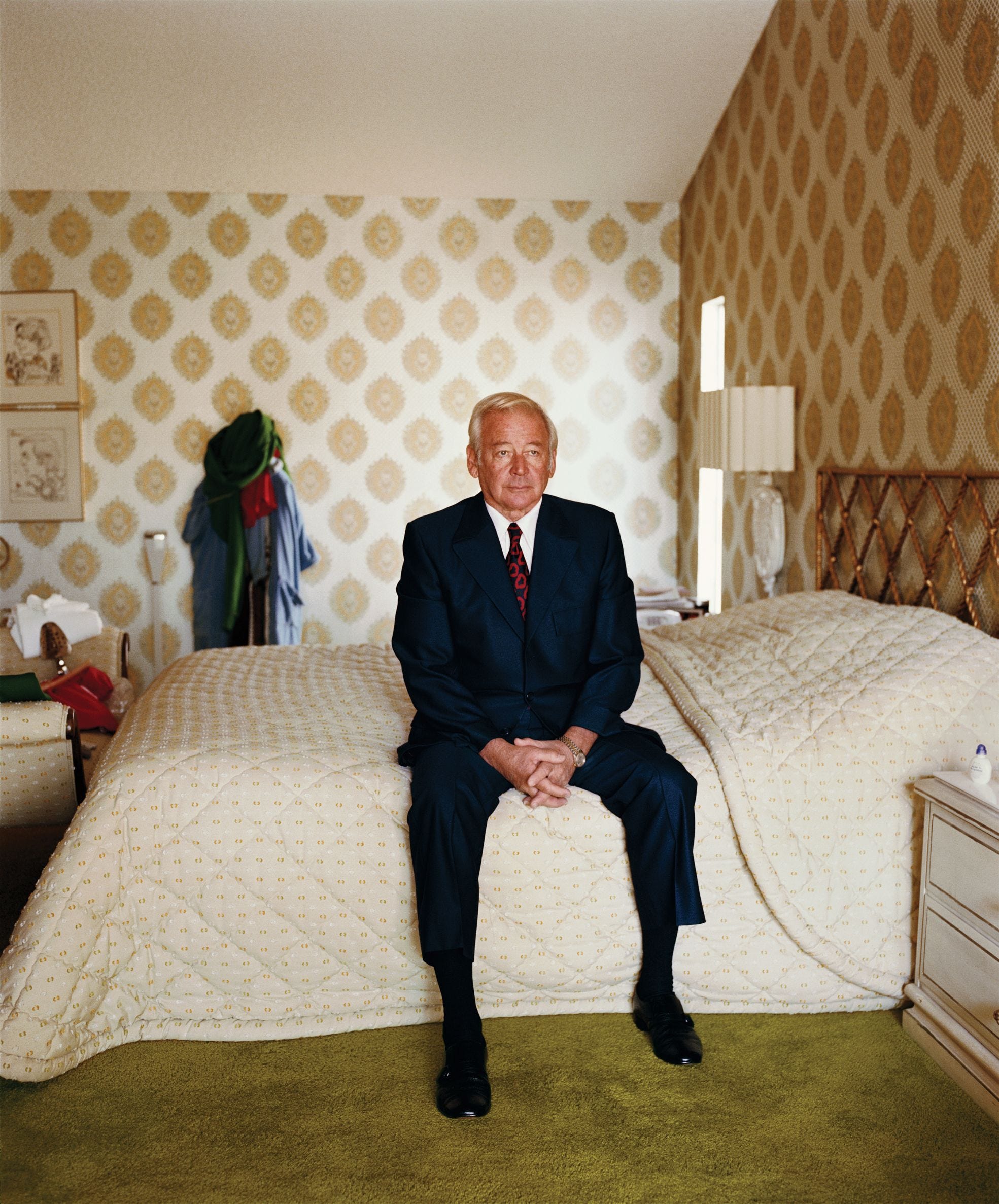
The macro narrative here is a decades long exploration of the American Dream, aging, and family history, focused entirely on Sultan’s parents in their Southern California home. It is perhaps the most famous and perennially relevant work in photographing family over an extended period.
Within this broader series, distinct micro-narratives emerge. One micro narrative follows his father’s early retirement and the resulting loss of identity. Another micro narrative unfolds through the sequences of 8mm home movie stills. These stills create a counter point to the medium format portraits, providing a conversation about memory versus reality. They offer the viewer a story about the ideal American family life that contrasts distinctly with the message of rest of the project, but still an important micro-narrative that serves the main storyline. All of these little stories help us understand the greater one.
Trent Parke, Minutes to Midnight
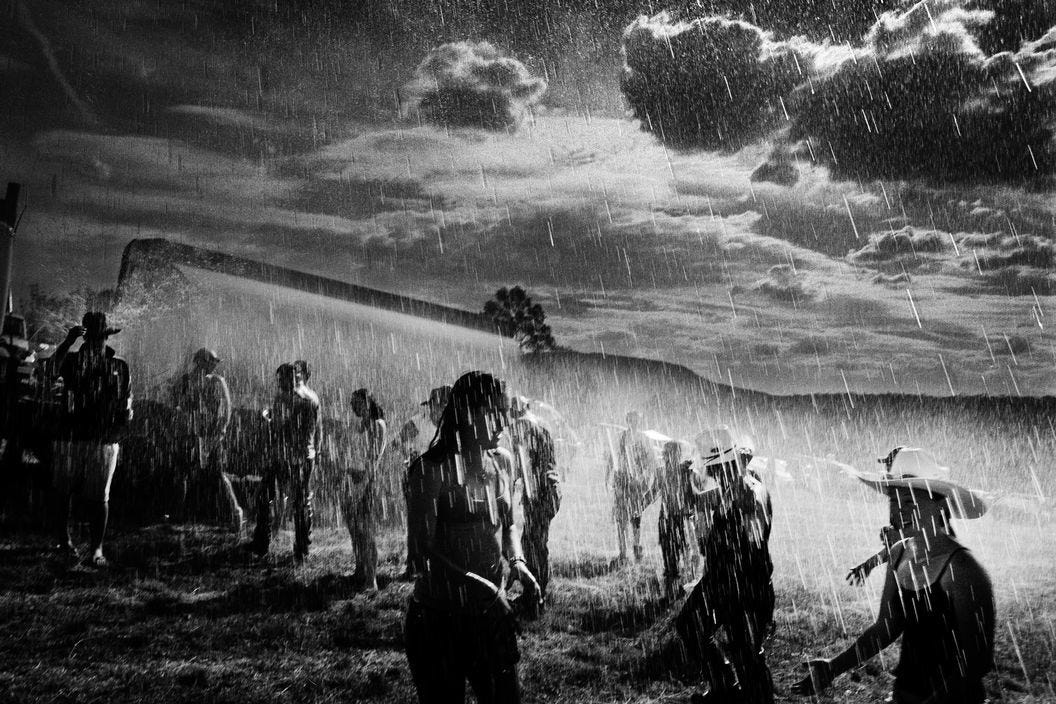
“Traveling 90,000 kilometers across Australia with his partner Narelle Autio, Trent Parke produced a body of work which he came to call Minutes to Midnight. A book was published and an exhibition was created that toured globally. The work is both a document of a changing nation, uneasy with its identity and its place in the world, and a work of fiction which when combined suggests the build-up, aftermath and rebirth of an apocalyptic world.” - Magnum
A particularly poignant micro narrative involves an underwater sequence of swimmers, followed by his pregnant wife underwater, followed by the water birth of his child. This personal micro-narrative of hope and rebirth provides an important balance to the books environmental and societal decay macro narrative. It helps the viewer feel hope in the face of an overwhelming narrative.


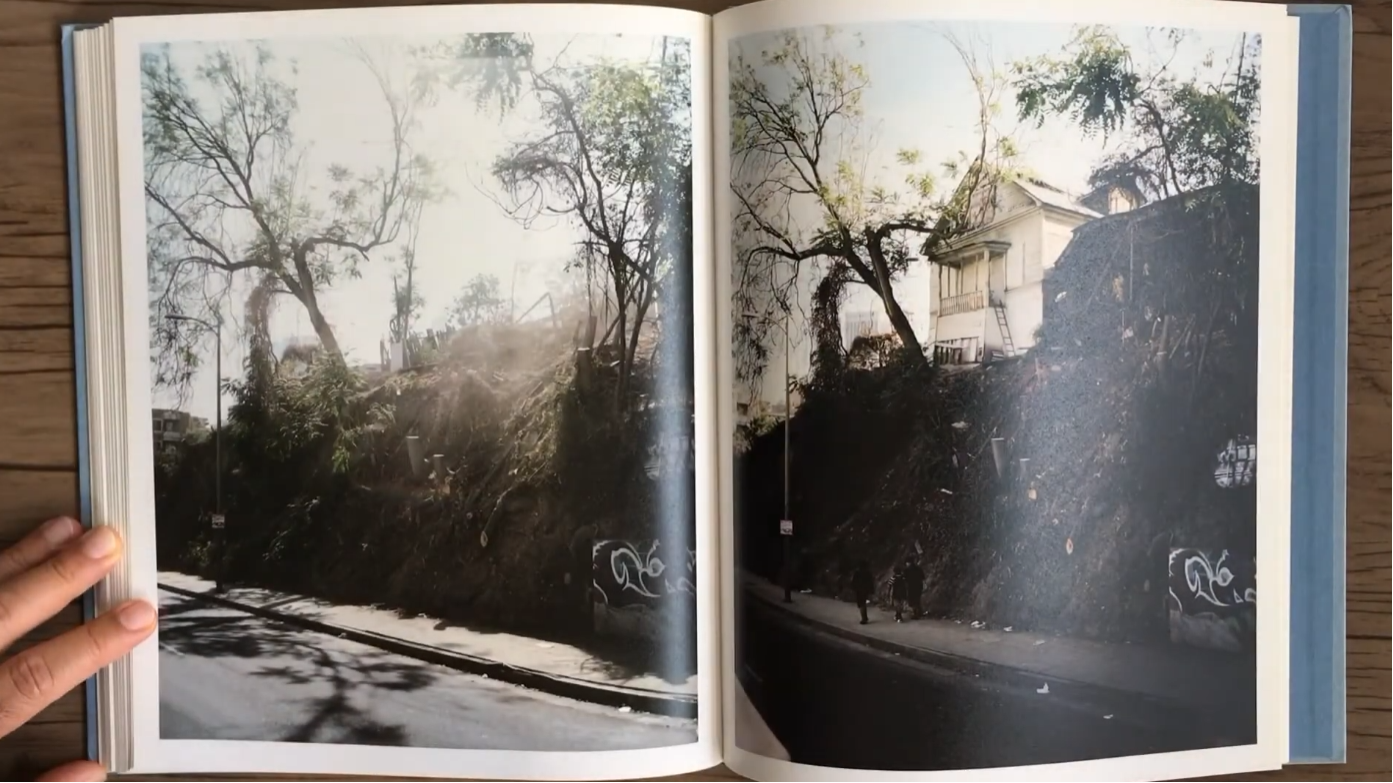
Gregory Halpern, ZZYZX
The macro narrative is a strict geographical progression from east to west. The desolate deserts of Eastern California, moving westward through urban Los Angeles, and finally concluding at the Pacific Ocean.
Halpern embeds many recurring themes that function as micro narratives. The recurring motiff of hands reaching, touching. Faces dispersed throughout, whether human or animal, ground the broader narrative. Additionally, intense portraits of specific individuals act as a pause in the westward momentum of the book, and provide characters that force the viewer to imagine their own narratives.
One diptych in the second half of the book shows a house on a hill, the first image is the burnt remains, the second is an intact home. The viewer doesn’t know which actually came first, but the important takeaway is that time and space are two forces that should be considered distinctly. Not only is the narrative physically moving through space, but also through time.
Photographers can use on a few techniques to nest smaller stories into the broader project. These methods guide the viewer through the project and help make a more sensible story.
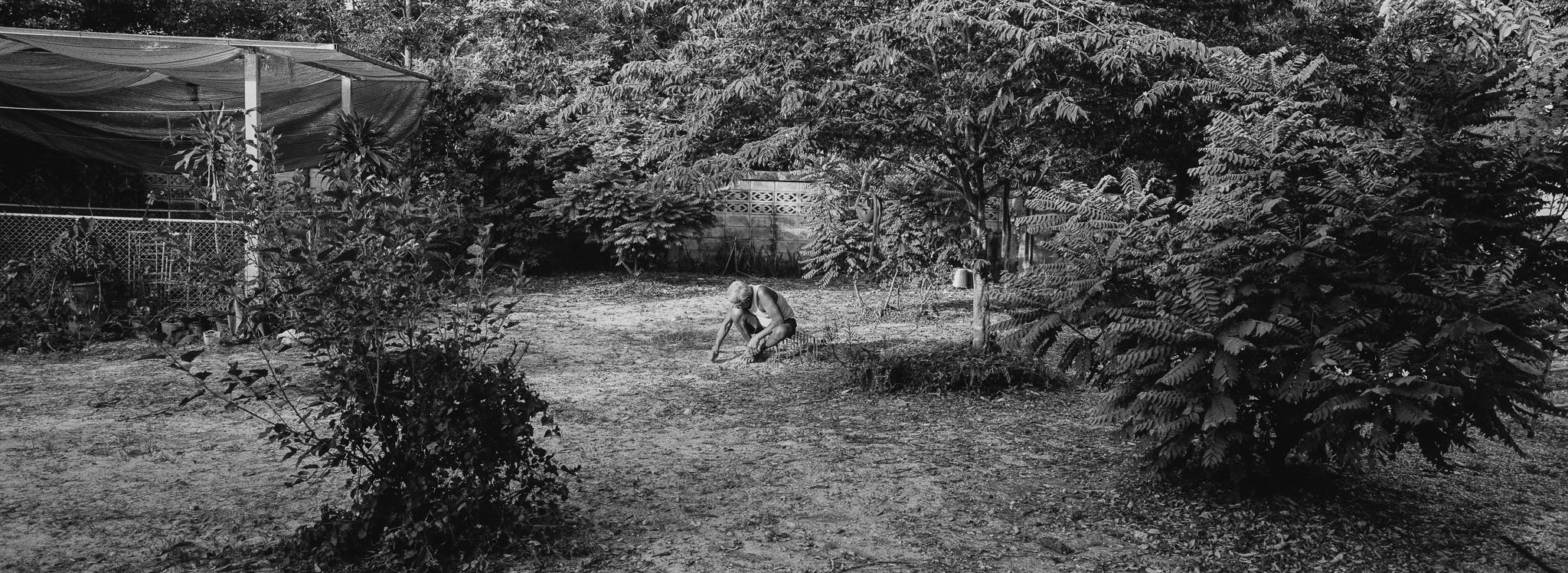
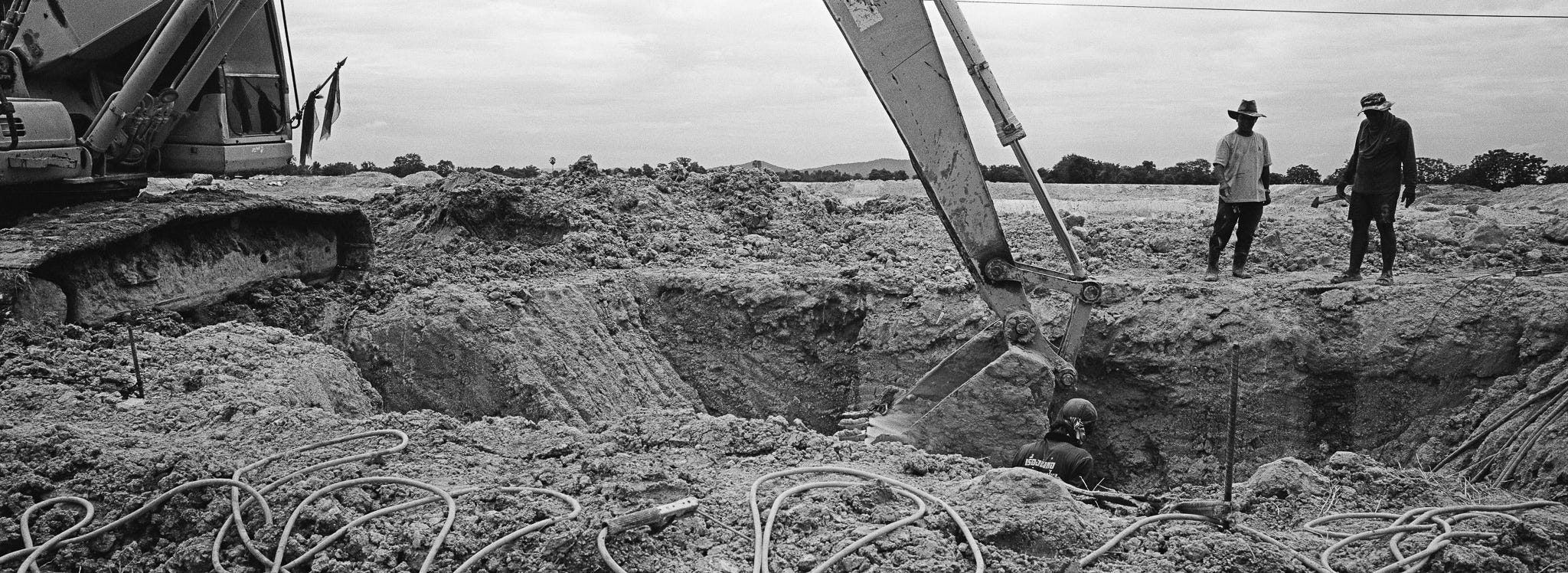
One method is a hinge photograph to transition between the main project and the smaller storyline. The photographer places elements of multiple scopes within a single frame. For example, when documenting the agricultural landscapes of Thailand, a photographer might compose a wide shot of a field that also features a farmer in the immediate foreground. Viewers register the broad geography first, and then focus on the farmer to start a more intimate character study that follows on the next pages.
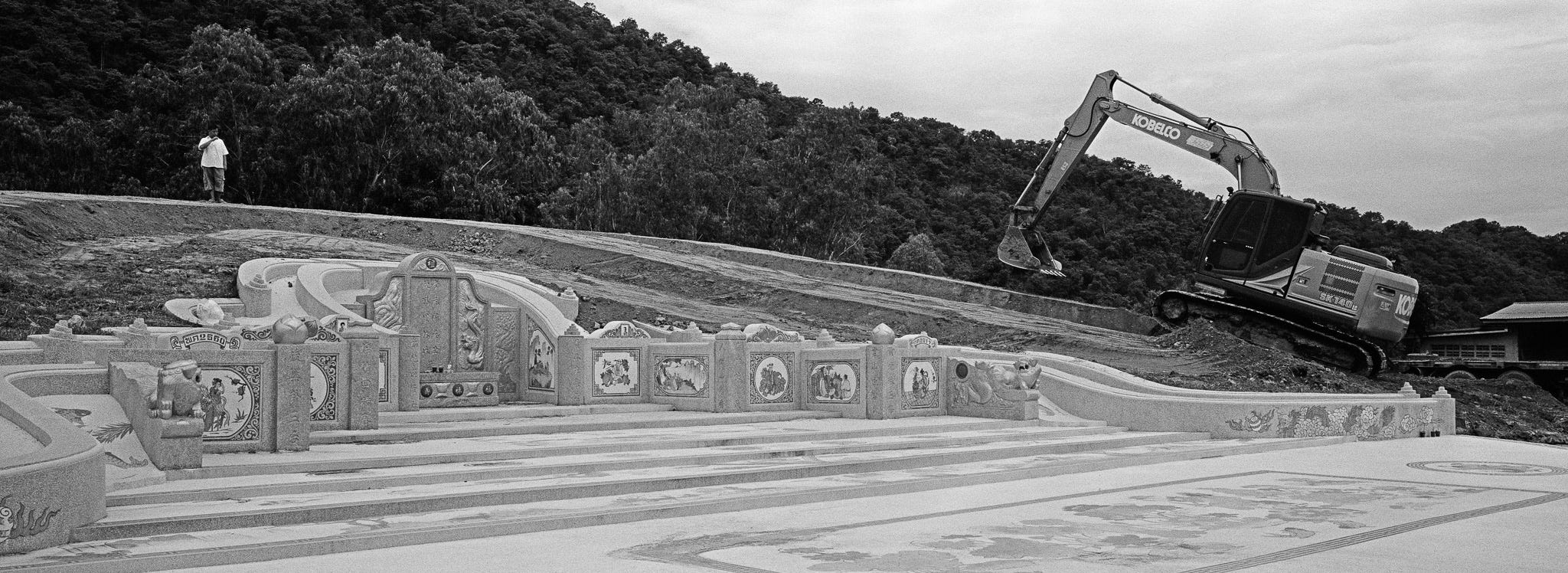
Photographers can also link disjointed subjects by matching geometry, textures, themes, or lighting, through diptychs and triptychs. If a project explores the principle of impermanence, a photographer might sequence a tight frame of a wilting lotus flower immediately following a wide shot of a decaying concrete structure. Viewers recognize the commonalities. Through visual and metaphorical repetition, the photographer creates a micro-narrative on decay in service of the projects overarching narrative.
So don’t forget to slice up your pizza into manageable pieces before trying to consume it.
Until next time.
Adam Birkan